
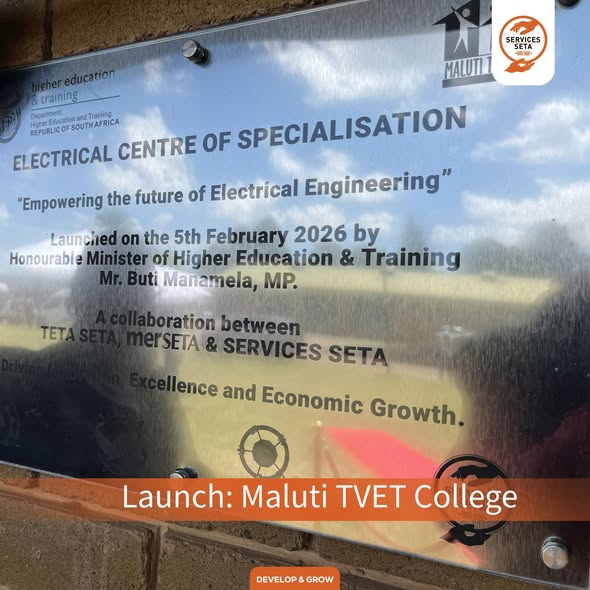
New Era for Artisan Training: The launch of the Electrical Centre of Specialisation at the Kwetlisong Campus of Maluti TVET College marks a defining moment for skills development in QwaQwa and the wider Eastern Free State. Officially opened on 5 February 2026, the centre represents a practical response to South Africa’s ongoing demand for qualified artisans, particularly in the electrical and engineering fields.
More than a ceremonial opening, this initiative reflects a long-term investment in people, infrastructure, and economic participation. By bringing high-quality, trade-aligned training closer to historically underserved communities, the centre strengthens access to meaningful vocational education and creates clearer pathways into employment and entrepreneurship.
Why the Electrical Centre of Specialisation Matters for QwaQwa
For years, young people in QwaQwa and surrounding rural areas have faced structural barriers to artisan training. Many were forced to relocate to urban centres to access specialised facilities, often at high personal and financial cost. This new centre directly addresses that gap.
The Electrical Centre of Specialisation is designed to deliver industry-relevant training that aligns with modern workplace standards. Learners now have access to:
- Purpose-built electrical workshops
- Updated tools and trade testing infrastructure
- Structured apprenticeship pathways
- Training that reflects real-world industry requirements
By decentralising specialised training, the centre ensures that talent development happens where people live, not only where resources were historically concentrated.
A National Commitment Backed by Leadership
The centre was officially opened by the Minister of Higher Education and Training, Buti Manamela, underscoring the national importance of the initiative. The launch brought together a wide spectrum of stakeholders, including government representatives, Sector Education and Training Authorities (SETAs), industry partners, traditional leaders, educators, and learners.
This collaborative presence reflects a shared understanding: artisan development cannot succeed in isolation. It requires coordination between policy, funding, training institutions, and the labour market.
The Minister’s involvement also signals alignment with broader national priorities to expand Centres of Specialisation across the TVET system, ensuring that colleges become engines of economic inclusion rather than theoretical training hubs.
Role of SETAs in Strengthening Artisan Pathways
The establishment of the Electrical Centre of Specialisation was made possible through support from key SETAs, including Transport Education Training Authority, Services SETA, and MerSETA.
Their involvement is significant for several reasons:
- Workplace-aligned curricula
Training programmes are structured to meet current occupational standards, improving graduate employability. - Apprenticeship and learnership integration
Learners gain access to funded pathways that combine theory, practical training, and workplace exposure. - Trade test readiness
Facilities and assessments are aligned with national trade testing requirements, reducing bottlenecks for artisan certification. - Employer confidence
Industry-backed training reassures employers that graduates are job-ready and competent.
This model strengthens the entire artisan pipeline, from entry-level training to certified tradesperson status.
Expanding Opportunities for Youth and Adult Learners
One of the centre’s most important contributions is its inclusive approach. The Electrical Centre of Specialisation serves:
- School leavers seeking practical career pathways
- Unemployed youth looking for marketable skills
- Adult learners aiming to upskill or formalise experience
- Community members interested in self-employment and small enterprise development
Electrical skills remain in high demand across construction, energy, manufacturing, maintenance, and infrastructure projects. By equipping learners with certified, trade-relevant competencies, the centre improves their chances of securing sustainable livelihoods.
From Training to Employment and Entrepreneurship
Artisan training is not only about filling vacancies; it is also about enabling economic independence. Graduates of electrical programmes are well-positioned to:
- Enter formal employment in both public and private sectors
- Participate in infrastructure and housing projects
- Start small electrical contracting businesses
- Support local economic development through services and repairs
For rural and township economies, this has a multiplier effect. Skills stay within the community, income circulates locally, and dependency on external service providers decreases.
Strengthening the TVET Sector in the Eastern Free State
The launch of this centre enhances the reputation and capability of the TVET sector in the region. It demonstrates that TVET colleges can deliver high-quality, specialised training that matches industry expectations.
For Maluti TVET College, the centre reinforces its role as a strategic institution for regional development. For learners, it builds confidence that choosing TVET is not a second option, but a smart, future-oriented career decision.
Long-Term Impact on Communities
Beyond skills and qualifications, the Electrical Centre of Specialisation represents hope and opportunity. It shows what is possible when government, industry, and education partners work together with a shared purpose.
Over time, the centre is expected to contribute to:
- Reduced youth unemployment
- Increased artisan numbers in scarce skills areas
- Improved household incomes
- Stronger local economies
- Greater social stability through employment
This is why the initiative is best understood not merely as a facility, but as an investment in people and the future of the Eastern Free State.
Frequently Asked Questions
What is an Electrical Centre of Specialisation?
It is a specialised training facility within a TVET college that focuses on high-quality, industry-aligned electrical training, including apprenticeships and trade preparation.
Who can benefit from the centre?
Youth, unemployed individuals, adult learners, and aspiring artisans from QwaQwa and surrounding areas can benefit, depending on programme entry requirements.
Does the training lead to recognised qualifications?
Yes. Programmes are aligned with national occupational standards and trade testing requirements, ensuring recognised certification.
Why is SETA involvement important?
SETAs help fund training, align curricula with industry needs, and support workplace-based learning, which improves employment outcomes.
How does this centre help the local economy?
By training artisans locally, the centre supports employment, entrepreneurship, and service delivery within the community, reducing skills shortages and stimulating economic activity.
A Meaningful Step Forward for Skills Development
The launch of the Electrical Centre of Specialisation at Maluti TVET College’s Kwetlisong Campus is a practical demonstration of people-centred development. It brings opportunity closer to communities, aligns training with real labour market needs, and restores confidence in vocational education as a pathway to dignity and economic participation.
For QwaQwa and the Eastern Free State, this milestone is not the end of a project, but the beginning of a more skilled, inclusive, and sustainable future.