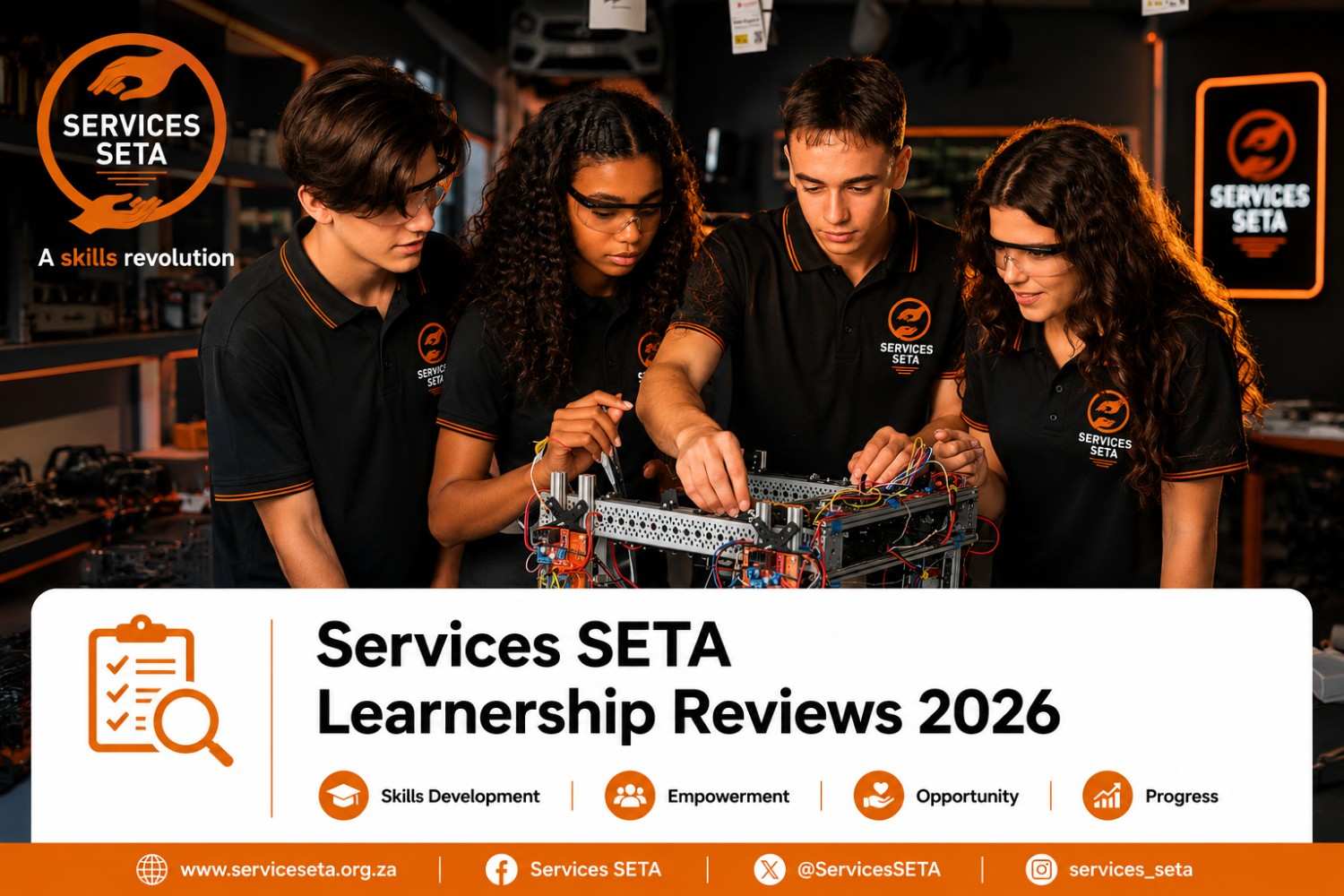
South Africa’s youth employment crisis has placed pressure on government, business and education authorities to think through ways in which young people can transition from studying to working. Sector Education and Training Authorities (SETAs) figure prominently in this debate, despite persistent criticism of governance, administration and the efficacy of their programmes.
SETAs are not a panacea for South Africa’s growing need for jobs, but they do serve an important role in linking education and training with employers, experience and skills.
For young people who need a first opportunity to gain experience, that can be critically important.
The experience hurdle for first-time job-seekers
One of the biggest hurdles for first-time job-seekers is the expectation that they already have experience.
While a school-leaver or graduate may have the qualifications for a particular post, they may be denied simply because an employer wants someone who can demonstrate that they can function in the workplace.
Learnerships, internships and apprenticeships can help bridge that gap.
SETA programmes can offer the opportunity for a young person to learn while they work, or to acquire skills and experience in the workplace as part of a formal training programme. The value of such an initiative is two-fold: it provides the qualifications, but it also gives the job-seeker the opportunity to demonstrate that they have operated successfully in the workplace.
Workplace learning can help overcome the hurdle of a lack of experience for first-time job-seekers.
SETAs cover a range of sectors, from services and information technology to agriculture, construction and manufacturing.
Their programmes can take different forms, including learnerships, internships, apprenticeships, skills programmes, occupational training and support for workplace-based training.
Each SETA’s offerings differ, so it is important for job-seekers to understand what each programme entails.
Some SETA programmes have sought to provide extended opportunities for graduates to gain experience in the workplace.
The Services SETA’s “To the Power of X²” graduate programme, for example, was designed to provide extended work experience.
The logic is straightforward: the more experience for those without it, the better their prospects for landing a job.
Stipends can help make programmes accessible for the unemployed
Even a valuable training programme can be inaccessible to those who are unemployed because of the opportunity cost of taking it up.
Transport, meals and other expenses can eat into the limited resources of the unemployed.
Stipends attached to some SETA programmes can help offset that opportunity cost.
A stipend should not be confused with a salary, and should not be assumed to be available in all SETA programmes, because it depends on the specific funding arrangements for each.
For the unemployed, however, the opportunity to receive a stipend can be critically important in terms of making a training programme both accessible and affordable.
SETAs can play a role in addressing the skills-development needs of a digital economy
As businesses become more digital, the skills-development needs of the economy change.
The MICT SETA, for example, has identified the importance of developing skills in information and communication technologies and related fields.
This is an important observation, because skills-development needs change over time, and training needs to keep pace with those needs.
Digital skills can open doors to a range of occupations, from IT and software development to data analytics, telecommunications and digital business support functions.
The extent to which these opportunities can be accessed depends on how closely training programmes adhere to the needs of employers.
From skills development to entrepreneurship
Not all young people will find work, even after accessing a training programme.
That has fuelled an interest in entrepreneurship as an alternative to formal employment.
SETA programmes can support that goal, by providing training and support for young entrepreneurs and small businesses.
The potential value of such programmes extends beyond addressing the skills-development needs of one start-up business.
If successful, a small business can create jobs for others in the community.
Entrepreneurship training, however, is only one part of the story.
Access to finance, customers, infrastructure and management support also play a role in determining whether a small business can survive and grow.
Why partnerships are critical to South Africa’s youth employment needs
While government has a critical role to play in addressing South Africa’s youth employment needs, it cannot create jobs on its own.
Businesses play an important role, because they are the employers of record, and as such, have the ability to provide work opportunities for young people.
Public-private partnerships, therefore, are critical to South Africa’s youth employment needs.
SETAs have been key partners in this space, and their programmes have sought to engage businesses in providing work opportunities for young people.
The Youth Employment Service (YES) has also sought to mobilise businesses to create work opportunities for young people.
When combined with skills-development initiatives, such partnerships can help bridge the gap between training and the needs of employers.
The end goal should always be to create a pipeline from training programmes to jobs or sustainable self-employment.
SETAs remain a conundrum despite their potential role in addressing South Africa’s youth employment needs
The potential value of SETAs should not be confused with an endorsement of the status quo.
South Africa has been plagued by concerns about SETA governance, administration and spending, as well as their ability to deliver on their mandate to align skills-development with the economy’s needs.
There is also a question about whether training programmes are geared towards occupations that have demand in the economy.
A graduate may complete a training programme only to find that there are no vacancies in their field of expertise.
That raises the question of whether training should be geared more towards building general skills that have value across a range of occupations, rather than specific skills that may not be in demand.
It also raises the issue of measuring the impact of SETA programmes.
The number of people who have received training is a useful indicator, but it is not sufficient.
More informative are questions such as:
How many people successfully complete a programme?
Are the qualifications offered relevant and recognised?
How much experience does a person receive as part of a training programme?
How many people find work after completing a SETA programme?
Are they retained in the jobs?
Are the skills that people acquire relevant to the needs of employers?
Do entrepreneurship programmes lead to the creation of sustainable jobs?
Why reform is important
The rationale for reforming SETAs differs from arguing that they should not exist.
If SETAs have weaknesses, addressing them can enhance their value.
The payroll levy gives SETAs a critical role in terms of skills-development, but the challenge is to ensure that it is used wisely.
For young people, the opportunity to receive training is important, but it is even more critical that that training has relevance and offers credibility.
A programme that offers qualifications but no experience may not be as valuable as one that provides both.
What it means for young South Africans
For job-seekers, SETAs are a viable option, but it is important to ask the right questions.
For people who need experience to get a job, SETA programmes can be an option.
However, young people should be aware that the value of any programme depends on a range of factors, including the relevance of the qualification, accreditation, programme duration, whether it includes workplace training, the employer or training provider, the skills that will be developed, entry requirements, stipend amounts (if any) and what happens after the programme ends.
Those considerations can help a young person decide whether a SETA programme is worth their time and effort.
The bigger picture is that SETAs cannot solve South Africa’s youth employment crisis.
Training can enhance an individual’s employability, but it cannot create jobs where there are none.
That is why skills-development needs to be viewed in the context of economic development, and the need for jobs in South Africa.
The role of SETAs fits within that framework.
The bottom line
SETAs matter because South Africa needs organisations that can bridge the gap between education, skills and the workplace.
Their programmes can help young people overcome the experience hurdle, develop digital skills and, in some cases, become entrepreneurs.
However, their role should be viewed in the context of their ability to deliver on their mandate.
For young people, the best SETA programmes are those that offer relevant training, experience and accreditation.
That is critically important, given the high levels of youth unemployment in South Africa.