
Published: 8 June 2026
Author: Mosley Dupree
Category: Gap Year Programmes, Engineering Careers, Bursaries, Learnerships
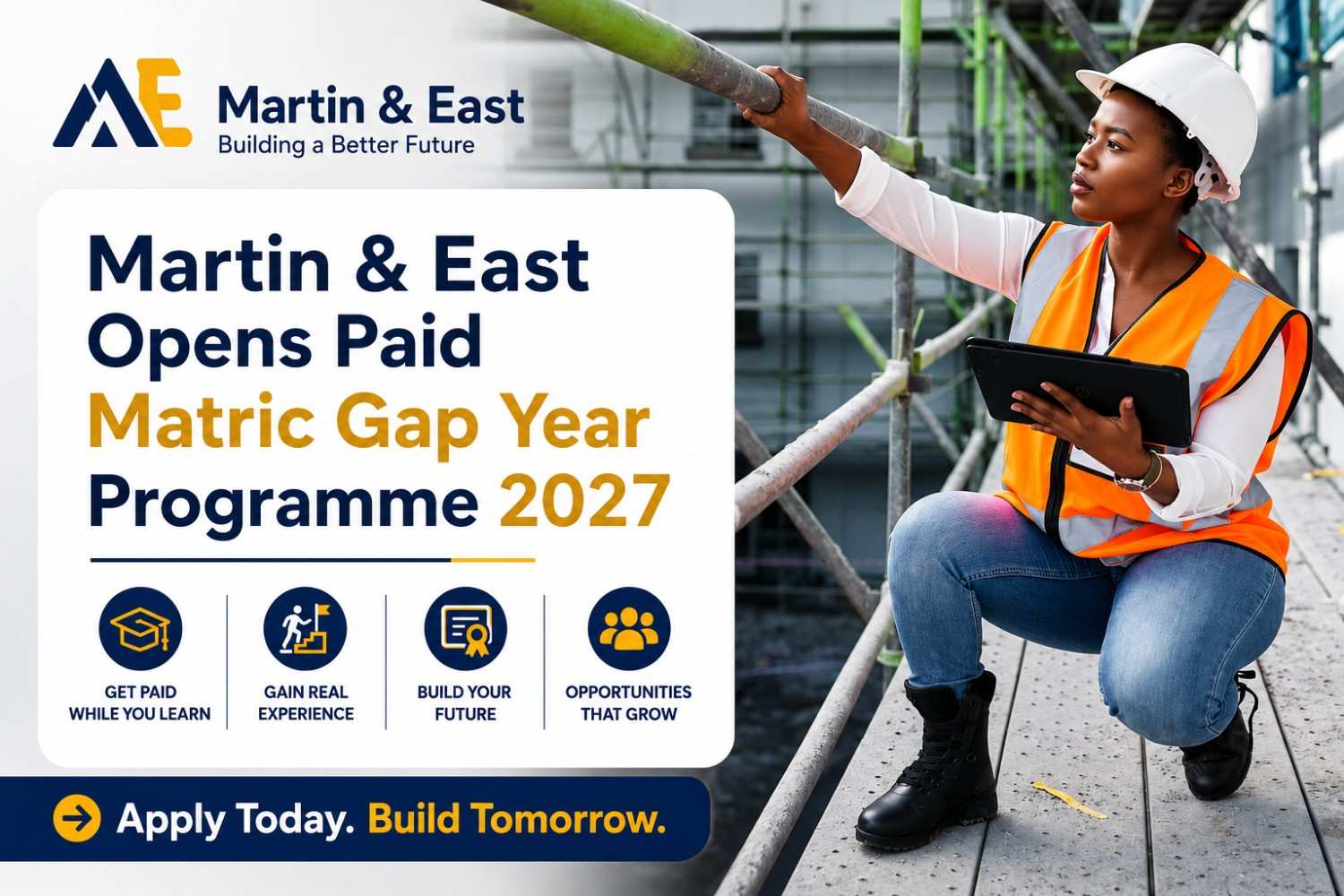
South African Grade 12 learners with a passion for Civil Engineering now have an opportunity to gain valuable industry experience, earn an income, and potentially secure funding for their future studies through the Martin & East Matric Gap Year Programme 2027.
Unlike traditional gap years that often lack structured development opportunities, this programme combines practical workplace exposure with formal learnership training, giving participants a head start before entering university.
The initiative is aimed at learners who are currently completing Grade 12 in 2026 and intend pursuing Civil Engineering studies in 2028.
Why This Gap Year Opportunity Stands Out
Many school leavers enter university without fully understanding the realities of working in the engineering and construction sectors.
The Martin & East Matric Gap Year Programme is designed to bridge that gap by providing participants with direct exposure to major infrastructure and construction projects.
Successful candidates will spend a year working alongside experienced industry professionals while developing practical workplace skills and gaining insight into real-world engineering environments.
Participants may also earn a salary during the programme, making it a valuable opportunity for learners seeking both experience and financial support.
Programme Overview
| Programme | Martin & East Matric Gap Year Programme 2027 |
|---|---|
| Company | Martin & East (Pty) Ltd |
| Programme Type | Paid Gap Year Programme |
| Industry | Civil Engineering and Construction |
| Closing Date | 30 October 2026 |
| Eligibility | Grade 12 Learners (2026) |
| Citizenship | South African Citizens Only |
| Future Study Requirement | Intend Studying Civil Engineering in 2028 |
What Participants Can Expect
During the programme, learners may gain practical exposure across various sectors of the civil engineering and construction industry.
The objective is to provide a broad understanding of how infrastructure projects are planned, managed, and executed.
Road Construction and Rehabilitation
Road infrastructure remains one of South Africa’s most important development priorities.
Participants may gain experience in:
- Road construction processes
- Pavement structures
- Site preparation
- Construction materials
- Quality control systems
- Rehabilitation projects
Bulk Earthworks and Landfills
Earthworks are critical to the success of many infrastructure developments.
Learners may observe:
- Excavation activities
- Site levelling
- Soil compaction techniques
- Landfill development projects
- Environmental compliance procedures
Pipelines and Underground Infrastructure
Participants may gain insight into the installation and maintenance of:
- Water pipelines
- Sewer networks
- Underground utility systems
- Municipal infrastructure services
Bridge Construction and Concrete Structures
Civil engineers play a central role in major structural projects.
Exposure may include:
- Bridge construction activities
- Reinforced concrete works
- Structural inspections
- Engineering supervision practices
Road Surfacing and Maintenance
Maintaining transport infrastructure is essential for economic growth.
Participants may learn about:
- Asphalt surfacing
- Road maintenance strategies
- Quality assurance processes
- Infrastructure preservation techniques
Modern Engineering Technologies
Additional exposure may include:
- Trenchless construction solutions
- Housing infrastructure projects
- Synthetic sports field construction
- Erosion protection systems
- Gabion installations
- Crushing and screening operations
This broad range of exposure helps participants understand the diverse career opportunities available within Civil Engineering.
Learnership Component Adds Valuable Experience
One of the programme’s biggest advantages is participation in a Construction Roadworks and Supervision Learnership.
Rather than simply observing construction activities, learners receive structured workplace learning and practical industry training.
This experience can strengthen a participant’s CV and provide a competitive advantage when applying for university programmes, bursaries, or future employment opportunities.
Eligibility Requirements
To qualify for consideration, applicants must meet the following requirements.
Academic Requirements
Applicants must:
- Be in Grade 12 during 2026
- Intend studying Civil Engineering in 2028
- Achieve a minimum of 60% in:
- Pure Mathematics, or
- Mathematics Literacy, or
- Technical Mathematics
- Achieve a minimum of 60% in Physical Science
Citizenship Requirements
Applicants must:
- Be South African citizens
Meeting the minimum requirements does not guarantee selection.
Potential Bursary Opportunities
A major attraction of the programme is the possibility of receiving bursary funding after successfully completing the Gap Year.
According to programme information, bursary awards may depend on:
- Workplace performance during the programme
- Acceptance into an approved tertiary institution
- Internal selection and evaluation processes
This creates a potential pathway from high school to university and ultimately into the Civil Engineering profession.
Universities Considered for Funding
Successful candidates may be considered for funding if accepted into approved institutions such as:
- University of Cape Town
- Stellenbosch University
- University of Pretoria
- Cape Peninsula University of Technology
- Nelson Mandela University
Supported Qualifications
Funding may be available for qualifications including:
- Bachelor of Engineering (Civil)
- Bachelor of Science in Engineering (Civil)
- Bachelor of Engineering Technology (Civil)
- Diploma in Civil Engineering
How to Apply
Applicants must submit the following:
- Comprehensive Curriculum Vitae (CV)
- June 2026 Grade 12 results
Application Details
Email Subject: Scholar Recruitment 2027
Email Address: [email protected]
Contact Persons
- Megan Adonis
- Zelia Cyster
Documents to Prepare Before Applying
To strengthen an application, learners should prepare:
- Updated CV
- Certified copy of South African ID
- June 2026 Grade 12 report
- Academic achievement certificates
- Leadership certificates
- Community involvement certificates
- Extracurricular achievement records
Strong supporting documentation can help demonstrate commitment, leadership potential, and academic achievement.
Important Closing Date
Applications for the Martin & East Matric Gap Year Programme 2027 close on:
30 October 2026
Learners are encouraged to submit applications well before the deadline to avoid last-minute issues.
Final Thoughts
The Martin & East Matric Gap Year Programme 2027 offers far more than a traditional gap year experience. It provides aspiring Civil Engineers with practical industry exposure, workplace learning, potential bursary opportunities, and the chance to earn an income while preparing for university studies.
For Grade 12 learners who are passionate about infrastructure development, construction projects, and engineering careers, this programme could serve as an important stepping stone toward a successful future in Civil Engineering.
Editorial Transparency
This article is based on information provided in the Martin & East Matric Gap Year Programme 2027 advertisement. Information is published for educational and career guidance purposes. Applicants should verify all programme details directly with the employer before applying.
Sources and References
- Martin & East Matric Gap Year Programme 2027 Advertisement
- South African Civil Engineering Industry Information
- Department of Higher Education and Training (DHET)
- South African Qualifications Authority (SAQA)
About the Author
Setaco Team specialises in reporting South African learnerships, internships, bursaries, graduate programmes, apprenticeships, and youth employment opportunities. Our editorial process prioritises accuracy, transparency, and helpful career guidance for students and job seekers.
