
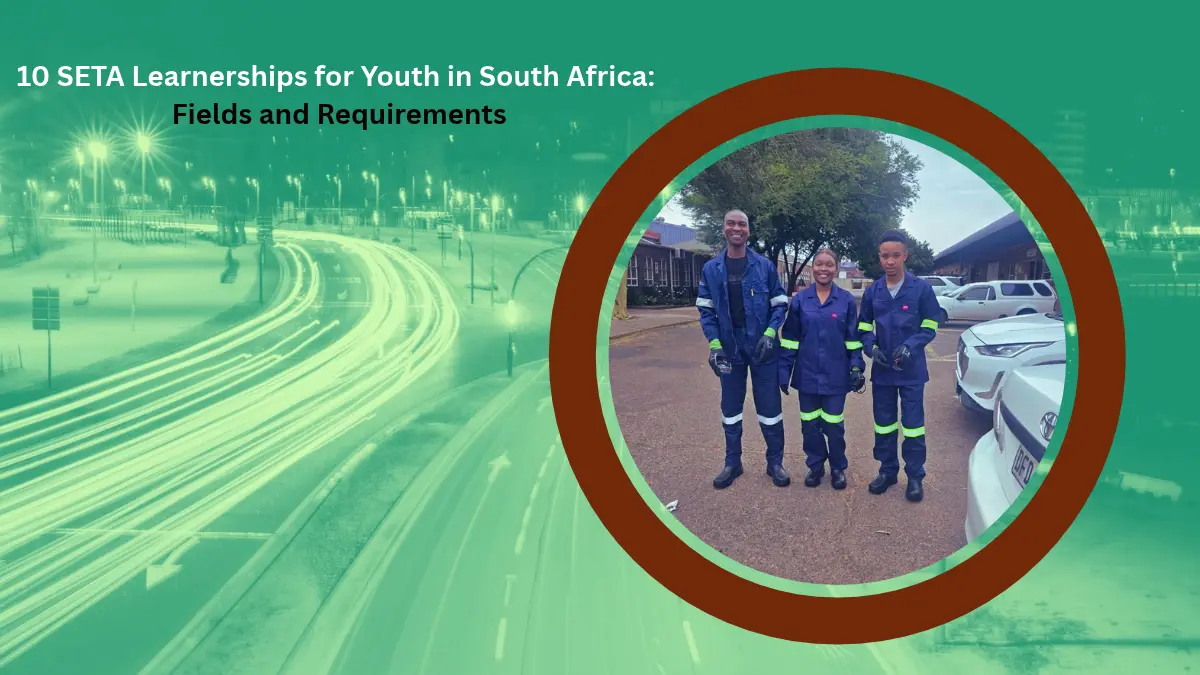
South African youth looking to gain recognised qualifications, develop workplace skills and improve their employment prospects can explore learnership opportunities supported by the country’s Sector Education and Training Authorities (SETAs).
SETA-supported learning programmes cover a wide range of industries, including information technology, banking, insurance, accounting, manufacturing, transport, tourism, local government, safety and security, and business services.
A learnership combines structured theoretical training with practical workplace experience. Depending on the programme, learners work towards an occupational qualification or another recognised qualification registered on the National Qualifications Framework (NQF).
Some learnerships also provide a monthly stipend to help unemployed participants meet basic expenses while completing their training. However, stipend amounts, eligibility criteria and payment conditions differ between programmes and participating employers.
For young people who are unsure which industry to pursue, understanding the different SETAs and the fields they support can be a useful starting point.
Below are 10 SETAs to investigate when looking for learnership opportunities in South Africa.
1. MICT SETA Learnerships: Information Technology and Digital Skills
The Media, Information and Communication Technologies Sector Education and Training Authority (MICT SETA) supports skills development in information technology, telecommunications, media and related industries.
Its learning areas may appeal to young people interested in computers, digital services, software development and technical careers.
Potential fields include:
- Information Technology.
- Software development.
- Technical support.
- Telecommunications.
- Digital technologies.
- Media and communications.
These programmes can help learners develop skills relevant to technology-related workplaces.
Stipend information: MICT SETA states that learners enrolled in its funded learnership programmes are eligible for a monthly stipend of R2,500, subject to attendance and programme requirements. This amount should not be assumed to apply to every opportunity associated with the SETA.
Official website: https://mict.org.za/
2. BANKSETA Learnerships: Banking and Financial Services
BANKSETA supports skills development in the banking and alternative banking sector.
One of its youth development initiatives is the Letsema Post-Matric Learnership Programme, which targets post-matric candidates. The Kuyasa programme is aimed at postgraduate candidates.
Possible learning areas include:
- Banking services.
- Financial markets.
- Business analysis.
- Management development.
- Banking administration.
- Customer service.
These opportunities may interest young people who want to develop careers in banking, financial services and business administration.
Stipend information: Stipend arrangements must be confirmed in the relevant recruitment notice. Applicants should not assume that every BANKSETA programme offers the same monthly allowance.
Official website: https://bankseta.org.za/
3. INSETA Learnerships: Insurance and Financial Services
The Insurance Sector Education and Training Authority (INSETA) supports skills development in the insurance and related financial services industries.
Young people interested in insurance-related careers can investigate learning opportunities in areas such as:
- Long-term insurance.
- Short-term insurance.
- Insurance administration.
- Claims processing.
- Customer service.
- Financial services support.
INSETA supports learnerships for both employed and unemployed learners, with practical workplace experience forming part of the learning process.
Stipend information: Funding arrangements vary between programmes. Applicants should check the specific opportunity advertisement or learner agreement to establish whether an allowance is provided and how much it pays.
Official website: https://inseta.org.za/
4. FASSET Learnerships: Accounting, Finance and Administration
The Finance and Accounting Services Sector Education and Training Authority (FASSET) supports skills development in accounting, auditing, taxation, financial management and related services.
Its learning areas may be suitable for young people interested in working with financial records, bookkeeping, business administration and accounting services.
Examples of learning areas and qualifications include:
- Accounting Technician.
- Bookkeeping.
- Public Sector Accounting.
- Technical Financial Accounting.
- Office Administration.
- Small Business Financial Management.
- Debt Recovery.
FASSET’s learnership information includes registered qualifications in accounting and finance. The Institute of Certified Bookkeepers also administers learnerships on behalf of FASSET.
Stipend information: FASSET learner information describes a monthly stipend for unemployed learners participating in qualifying learnership programmes. The applicable amount and payment conditions should be confirmed for each funded intake.
Official website: https://www.fasset.org.za/
5. merSETA Learnerships: Manufacturing and Engineering
The Manufacturing, Engineering and Related Services Sector Education and Training Authority (merSETA) supports skills development in manufacturing, engineering and related industries.
Young people interested in technical and industrial careers can investigate learning opportunities in fields such as:
- Manufacturing processes.
- Engineering production.
- Mechanical and technical skills.
- Metalworking.
- Automotive manufacturing.
- Plastics manufacturing.
- Related industrial occupations.
These programmes can provide occupational training and practical experience relevant to manufacturing and engineering workplaces.
Stipend information: merSETA explains that unemployed or pre-employed learners receive an allowance during a learnership. The applicable amount depends on the qualification and the relevant learner agreement.
Official website: https://www.merseta.org.za/
6. TETA Learnerships: Transport and Logistics
The Transport Education Training Authority (TETA) supports skills development in South Africa’s transport sector.
Its learning programme information includes registered learnerships in several transport and logistics occupations.
Examples include:
- Freight Handler.
- Clearing and Forwarding Agent.
- Supply Chain Practitioner.
- Bus Driver.
- Truck Driver.
- Shipping Agent.
- Road Transport Manager.
These qualifications cover different parts of the transport and logistics industry, from handling freight to managing transport operations.
Some occupations have additional entry requirements, such as relevant driving licences or other occupational conditions. Applicants should check the specific qualification and recruitment advertisement before applying.
Stipend information: Stipend amounts are programme-dependent. Applicants should confirm the allowance with the participating employer or training provider.
Official website: https://www.teta.org.za/
7. CATHSSETA Learnerships: Tourism and Hospitality
The Culture, Arts, Tourism, Hospitality and Sport Sector Education and Training Authority (CATHSSETA) supports skills development in tourism, hospitality, arts, culture, sport and related industries.
Its learning areas may interest young people who want to work in hotels, restaurants, tourism businesses, travel services and other related workplaces.
Potential learning areas include:
- Hospitality services.
- Accommodation services.
- Food and beverage services.
- Tourism operations.
- Travel services.
- Tourist guiding.
- Events and recreation.
CATHSSETA explains that learnerships combine structured theoretical learning with practical workplace training.
Stipend information: Allowances depend on the funded programme and whether the learner is employed or unemployed. Applicants should check the specific advertisement for payment details.
Official website: https://www.cathsseta.org.za/
8. LGSETA Learnerships: Local Government and Municipal Services
The Local Government Sector Education and Training Authority (LGSETA) supports skills development in municipalities and the local government sector.
Its learning areas may suit young people interested in municipal administration, public finance, community development and environmental services.
Potential learning areas include:
- Municipal Finance and Administration.
- Public Finance Management.
- Local Economic Development.
- Municipal Integrated Development Planning.
- Environmental monitoring.
- Water-related occupational qualifications.
LGSETA also publishes information about registered occupational qualifications and learnership programmes.
Stipend information: LGSETA’s grants policy includes a monthly learner stipend allocation for unemployed learnership participants. The actual amount and funding conditions should be checked against the relevant programme and intake.
Official website: https://lgseta.org.za/
9. SASSETA Learnerships: Safety, Security and Legal Services
The Safety and Security Sector Education and Training Authority (SASSETA) supports skills development in safety, security, legal services and related occupations.
Young people interested in these fields can investigate learning opportunities in areas such as:
- Security services.
- Security supervision.
- Legal services.
- Compliance-related occupations.
- Investigation-related occupational training.
- Community safety-related skills.
SASSETA explains that learnerships combine structured learning with practical workplace experience and lead to qualifications registered on the NQF.
Entry requirements differ depending on the occupation. Some opportunities may have additional eligibility, registration or workplace requirements.
Stipend information: The allowance depends on the employer and funded programme. Applicants should confirm the amount and payment conditions in the official advertisement.
Official website: https://www.sasseta.org.za/
10. Services SETA Learnerships: Business and Personal Services
Services SETA supports skills development across a range of service industries.
Its learning areas include:
- Business and management services.
- Contact centre operations.
- Office administration.
- Personal care.
- Hairdressing.
- Real estate-related services.
- Cleaning and hiring services.
- Communication and marketing.
These learning areas offer different routes for young people interested in business services, administration, customer support and personal services.
Services SETA also operates a learner portal where prospective learners can create profiles and make their information available to participating employers and training providers.
Registering on the portal does not guarantee placement. It can, however, help employers and providers identify potential learners.
Stipend information: Services SETA does not have one universal stipend amount for every learnership. Applicants should confirm the allowance with the employer or implementing provider.
Official website: https://www.serviceseta.org.za/
Summary: 10 SETAs and the fields they support
| SETA | Main learning areas | Stipend information |
|---|---|---|
| MICT SETA | IT, software and telecommunications | R2,500 for eligible funded learnerships, subject to conditions |
| BANKSETA | Banking and financial services | Programme-dependent |
| INSETA | Insurance and claims administration | Programme-dependent |
| FASSET | Accounting, finance and bookkeeping | Programme-dependent |
| merSETA | Manufacturing and engineering | Allowance for unemployed learners; amount varies |
| TETA | Transport and logistics | Programme-dependent |
| CATHSSETA | Tourism and hospitality | Programme-dependent |
| LGSETA | Municipal finance and local government | Funding-policy allowance; verify the current intake |
| SASSETA | Safety, security and legal services | Programme-dependent |
| Services SETA | Business, personal and other services | Programme-dependent |
Important: This is a guide to SETA sectors and their learning areas, not a list of 10 currently open vacancies. Stipend information should not be treated as a guarantee that every learner in a particular sector will receive the same amount.
What is a SETA learnership?
A learnership is a structured work-based learning programme that combines theoretical education with practical workplace experience.
It is linked to a registered qualification or occupational learning programme. Learners develop knowledge and practical skills while completing the requirements of the programme.
A typical learnership involves:
- Learner selection: Applicants must meet the entry requirements of the opportunity.
- Workplace experience: An employer provides a practical environment where learners can develop occupational skills.
- Structured training: A training provider delivers the required learning component.
- Assessment: Learners are assessed as they progress through the programme.
- Qualification: Successful completion can lead to the relevant registered qualification.
The relevant SETA oversees or quality-assures learning programmes within its sector, in accordance with applicable requirements.
Applicants should not assume that a programme is recognised simply because a training company uses a SETA logo. Before accepting a placement, verify the provider and the qualification through the relevant authority.
Who can apply for SETA learnerships?
There is no single set of entry requirements for all SETA learnerships. Each employer, training provider and programme may have its own criteria.
Depending on the opportunity, applicants may be required to:
- Be South African citizens.
- Have Grade 10, Grade 11 or Grade 12.
- Be unemployed when applying for an opportunity intended for unemployed learners.
- Fall within the advertised age range.
- Have specific school subjects or post-school qualifications.
- Live in a particular province, municipality or area.
- Meet the employer’s and training provider’s requirements.
Some programmes are aimed at matriculants, while others require an N6 qualification, diploma or degree.
Age requirements also differ. Applicants should check the minimum age and any other eligibility conditions in the official advertisement. Not every learnership is open to applicants under 18.
Do all SETA learnerships pay a monthly stipend?
No. There is no single stipend amount that applies to every SETA or learnership.
MICT SETA, for example, states that learners enrolled in its funded learnership programmes are eligible for a monthly stipend of R2,500, subject to programme conditions.
Other SETAs and participating employers may have different allowance arrangements. The amount may depend on the qualification, programme duration, funding agreement and whether the learner is employed or unemployed.
Before accepting an opportunity, check:
- The monthly stipend or allowance.
- Whether payment depends on attendance.
- How long stipend payments will continue.
- Whether transport or accommodation is covered.
- Any additional conditions in the learner agreement.
A learner stipend is an allowance associated with participation in a programme. It should not automatically be treated as a permanent salary or a guarantee of employment after completion.
How to find and apply for SETA learnerships
Finding a suitable learnership requires more than identifying the relevant SETA. Applicants must also look for an actual funded opportunity offered by an employer or training provider.
The following steps can help:
Step 1: Choose an industry
Consider which career field interests you. Options include information technology, banking, finance, manufacturing, transport, tourism, local government, security and business services.
Step 2: Identify the relevant SETA
Visit the official website of the SETA responsible for the industry you want to enter.
Step 3: Search for learner opportunities
Check sections covering learnerships, youth development, learning programmes and discretionary grants.
Keep in mind that some discretionary grant announcements are intended for employers and training providers rather than individual applicants.
Step 4: Read the official advertisement
Before applying, check the qualification, age requirements, location, stipend, programme duration, required documents and closing date.
Step 5: Verify the training provider
Confirm that the provider is authorised to deliver the relevant programme and that the qualification is recognised.
Step 6: Prepare your application documents
Depending on the opportunity, you may need:
- Certified South African ID.
- Updated CV.
- Matric certificate or latest school results.
- Academic transcripts, where applicable.
- Proof of residence.
- Additional documents requested in the advertisement.
Step 7: Apply through the stated channel
Submit your application using the official email address, recruitment portal or other method specified in the vacancy notice. Keep proof of submission where possible.
Where can unemployed youth register for learnership opportunities?
Unemployed work-seekers can register at their nearest Department of Employment and Labour Labour Centre. The South African Government provides information about registering for a learnership as an unemployed person.
Visit the government information page:
https://www.gov.za/faq/government-services/how-do-i-register-learnership-if-unemployed
Young people can also contact the relevant SETA to ask about employers and training providers offering learning programmes in their sectors.
Registration on a database or learner portal does not guarantee selection. Applicants should continue checking official vacancy announcements and applying for opportunities that match their qualifications.
Important advice before accepting a learnership
Before submitting personal documents or accepting a placement, take time to verify the opportunity.
Check that the employer and training provider are identifiable, the qualification is legitimate, and the application process is consistent with the official advertisement.
Be cautious of anyone demanding payment in exchange for a guaranteed learnership, interview or placement. Do not send money or sensitive personal information to unverified individuals.
Also remember that a SETA’s general website may provide information about qualifications and funding without advertising vacancies that are currently open to individual applicants.
Final reminder
SETA learnerships provide different routes into occupational training and workplace experience across South Africa’s industries. The 10 SETAs covered in this guide offer learning areas that can help young people explore careers in technology, finance, insurance, engineering, transport, tourism, local government, security and business services.
The best opportunity will depend on your education, career interests, location and the entry requirements of the programme.
Not every learnership is open throughout the year, and stipend amounts are not the same across all sectors. Always check the official advertisement, verify the training provider and qualification, and confirm the application deadline before submitting your documents.
Sources and Verification
The information in this guide is based on the SETA websites and South African Government information pages listed below. Applicants should consult the relevant authority for current programme details, funding conditions and application requirements.
- MICT SETA – Learnership Stipend
- BANKSETA – Youth Programmes
- INSETA – Learning Programmes
- FASSET – Learnerships
- merSETA – Learnerships
- TETA – Learning Programmes
- CATHSSETA – Learning Programmes
- LGSETA – Qualifications and Skills Programmes
- SASSETA – Learnerships
- Services SETA – Learners and Learner Portal
- South African Government – Registering for a Learnership
Editorial note: This article is an information guide to SETA sectors and potential learning areas. It does not confirm that all 10 SETAs currently have learnership vacancies available to individual applicants. Programme requirements, funding and stipend arrangements must be checked against the relevant official opportunity.
This content was checked and verified by professional auditors and Admin Staff
