
For many South African students, securing a bursary is an important step towards accessing higher education. However, tuition fees are not the only expenses students need to consider. Textbooks, laptops, stationery, prescribed software and other study materials can also place pressure on students and their families.
Do bursaries cover textbooks, laptops and study materials?
Yes, many bursaries in South Africa provide financial assistance for textbooks, laptops and other study materials. However, coverage depends on the bursary provider, the funding arrangement and the conditions set out in the bursary agreement.
Some full-cost bursaries include allowances for essential learning materials, while partial bursaries may only cover tuition fees or selected education expenses.
Understanding what your bursary covers can help you prepare financially before the academic year begins.
1. Government Bursaries: NSFAS and Funza Lushaka
Government-funded bursaries may include allowances for learning materials, although the amounts and payment arrangements depend on the specific funding rules.
NSFAS
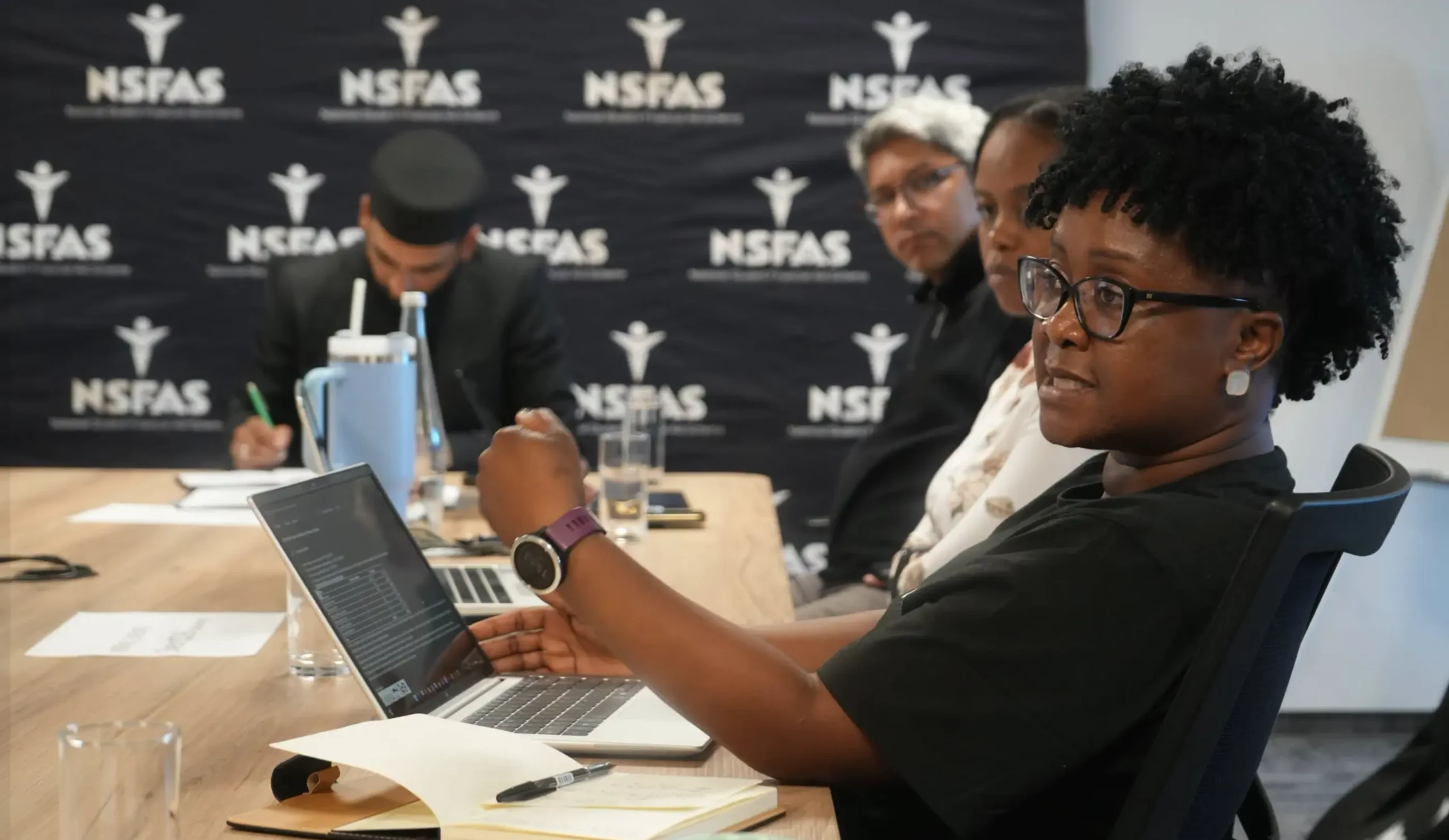
The National Student Financial Aid Scheme (NSFAS) provides eligible funded students with a learning materials allowance.
This allowance is intended to help students obtain essential learning resources, including prescribed textbooks and other approved study materials.
NSFAS has also provided laptops through its digital learning device arrangements. However, students should not assume that every funded student automatically receives a new laptop. Device provision is subject to the applicable NSFAS arrangements and institutional processes.
Students should check the latest allowance rules and communication from their institution to understand what is covered.
Funza Lushaka Bursary
The Funza Lushaka Bursary supports eligible students pursuing teaching qualifications.
The programme provides financial assistance that may include an allowance for learning materials, helping students obtain prescribed textbooks and other essential study resources.
The exact allowances and funding conditions should be confirmed through the official Funza Lushaka programme information and the student’s bursary agreement.
2. Corporate and Private Full-Cost Bursaries
Some corporate and private bursaries provide more comprehensive financial support to students studying in priority fields.
Depending on the provider, a full-cost bursary may include:
- A laptop or computer allowance.
- An annual textbook allowance.
- Prescribed study materials.
- Required software.
- Tuition and registration fees.
- Accommodation and living allowances.
Some providers supply a laptop directly, while others provide a once-off allowance or include approved computer costs in the funding arrangement.
Textbook allowances may also have annual limits. Students should check whether the bursary pays for prescribed books only or includes other approved learning resources.
Examples of corporate bursary providers include banks, mining companies and professional services firms. However, coverage differs between programmes, and students should not assume that every bursary from a particular industry offers the same benefits.
3. Partial or Tuition-Only Bursaries
Not all bursaries cover textbooks, laptops and study materials.
Some smaller bursaries, university-administered awards and merit-based funding programmes focus mainly on tuition fees. Others may cover tuition and accommodation without providing additional learning-material allowances.
Under these arrangements, students may need to pay for their own:
- Textbooks.
- Laptops and computers.
- Stationery.
- Printing.
- Prescribed software.
- Other course-related equipment.
Before accepting a partial bursary, find out which expenses are excluded so that you can plan for the remaining costs.
What Expenses Do Bursaries Usually Cover?
The following table provides a general comparison of possible bursary benefits. Actual coverage depends on the individual funding agreement.
| Study expense | Full-cost bursary | Partial bursary |
|---|---|---|
| Tuition and registration | Usually covered | Fully or partially covered |
| Textbooks | May be covered through an allowance | Often not covered |
| Stationery | May be covered | Often not covered |
| Laptop or computer | May be provided or funded | Often not covered |
| Prescribed software | May be covered if approved | Depends on the provider |
| Laboratory coats and tools | May be covered if required | Depends on the provider |
| Accommodation | May be covered | Depends on the provider |
| Living expenses | May include an allowance | Not always covered |
Important Rules Students Should Understand
Even when a bursary provides funding for study materials, students may have to follow specific rules.
1. Textbook Allowances May Be Restricted
Some bursary providers only pay for textbooks prescribed by lecturers or listed as compulsory learning materials for a particular course.
This means students may not be allowed to use the allowance to purchase general reading books or unrelated items.
2. Allowances Have Spending Limits
Textbook and learning-material allowances are often capped.
For example, if a bursary provides a R6,000 annual textbook allowance but the student’s approved books cost R8,000, the student may have to pay the R2,000 difference.
Always confirm the allowance amount before purchasing expensive materials.
3. Laptop Funding Is Not Always Automatic
Some bursaries provide laptops directly, while others offer a once-off computer allowance. Certain programmes may not cover computers at all.
Students should confirm whether a laptop is included, whether there are approved suppliers and whether the device must meet particular specifications.
4. Keep Your Receipts
Where a bursary requires students to purchase approved study materials, receipts and proof of purchase may be necessary.
Keep records of purchases and follow the provider’s instructions for submitting claims or accounting for allowances.
5. Read Your Bursary Agreement
The bursary agreement is one of the most important documents to review before accepting funding.
Check the sections dealing with tuition, accommodation, textbooks, laptops, study materials and other allowances. Also look for spending limits, payment arrangements and any conditions attached to the funding.
What Should You Do If Your Bursary Does Not Cover Textbooks or a Laptop?
If your bursary only covers tuition fees, consider the following options:
- Ask your university about textbook assistance or student support programmes.
- Check whether your institution has a laptop loan or device-support scheme.
- Look for second-hand textbooks in good condition.
- Ask lecturers whether older editions are acceptable before purchasing them.
- Check whether prescribed learning materials are available through your university library.
- Search for additional bursaries or educational support programmes that cover learning equipment.
Do not purchase expensive textbooks or devices expecting reimbursement unless the bursary provider has confirmed that the expense is approved.
Frequently Asked Questions
Do all bursaries in South Africa pay for textbooks?
No. Some bursaries provide textbook allowances, while others only cover tuition fees or selected study expenses. Students should check the funding conditions before accepting an award.
Does NSFAS pay for textbooks?
NSFAS provides eligible funded students with a learning materials allowance intended to support the purchase of approved learning resources. The amount and applicable arrangements are subject to the current NSFAS rules.
Does NSFAS provide laptops?
NSFAS has provided laptops through its digital learning device arrangements. However, laptop provision is subject to the applicable programme and institutional processes. Students should confirm the current arrangements with NSFAS or their institution.
Does Funza Lushaka cover study materials?
The Funza Lushaka Bursary may include an allowance for learning materials as part of its funding package. Students should confirm the current allowances and conditions through the official programme information.
Can I use my textbook allowance to buy a laptop?
Not necessarily. A textbook allowance and a laptop allowance may have different conditions. Check with the bursary provider before using one allowance for another expense.
What happens if my textbooks cost more than my allowance?
If the cost exceeds the approved allowance, you may have to pay the difference yourself unless the bursary provider approves additional funding.
Final Thoughts
Bursaries can help students cover more than tuition fees, but the level of support varies considerably between providers.
Some programmes include allowances for textbooks, laptops and essential study materials, while others only fund tuition or selected expenses.
Before accepting a bursary, carefully review the agreement and confirm exactly what is covered. Understanding the allowances and exclusions can help you avoid unexpected expenses during your studies.
This content was checked and verified by professional auditors and Admin Staff.
